
The air in Gadhada was heavy with the scent of departure. Bhagwan Shree Swaminarayan wished to travel from village to village to quench the spiritual thirst of his followers and uproot unrighteousness.
But in the royal court of Dada Khachar, the news was met with distress. Dada Khachar’s sisters—Laduba and Jivuba—along with the royal family, stood with folded hands. Their eyes, once bright with the joy of Shree Hari’s presence, were now clouded with the mist of separation.
“Prabhu,” they pleaded, “You have given us every happiness. How can we draw breath if you leave? Show us a way to survive without your Darshan.”
Moved by their selfless love, the Shreeji Maharaj smiled. He made a vow that would echo through the ages:
“Māru Gadhadu ne hu Gadhada-no, te to kadiye nathi matavāno. Sadā sant samāj sahit, Gadhadāmā rahish khachit”
“I am of Gadhada, and Gadhada is mine. I shall never truly depart. Amongst all of the santo, I shall reside here forever.”
(Harililamrut 6.2.9)
The Mysterious Artisan
To fulfill this promise, a divine plan was set in motion. One morning, as the sun climbed the sky over the Ghela River, a traveling artisan—a Salat—arrived at the Darbar. He carried two magnificent stone idols: one, a grand four-armed form, and another, a smaller image of the serpent Shesha.
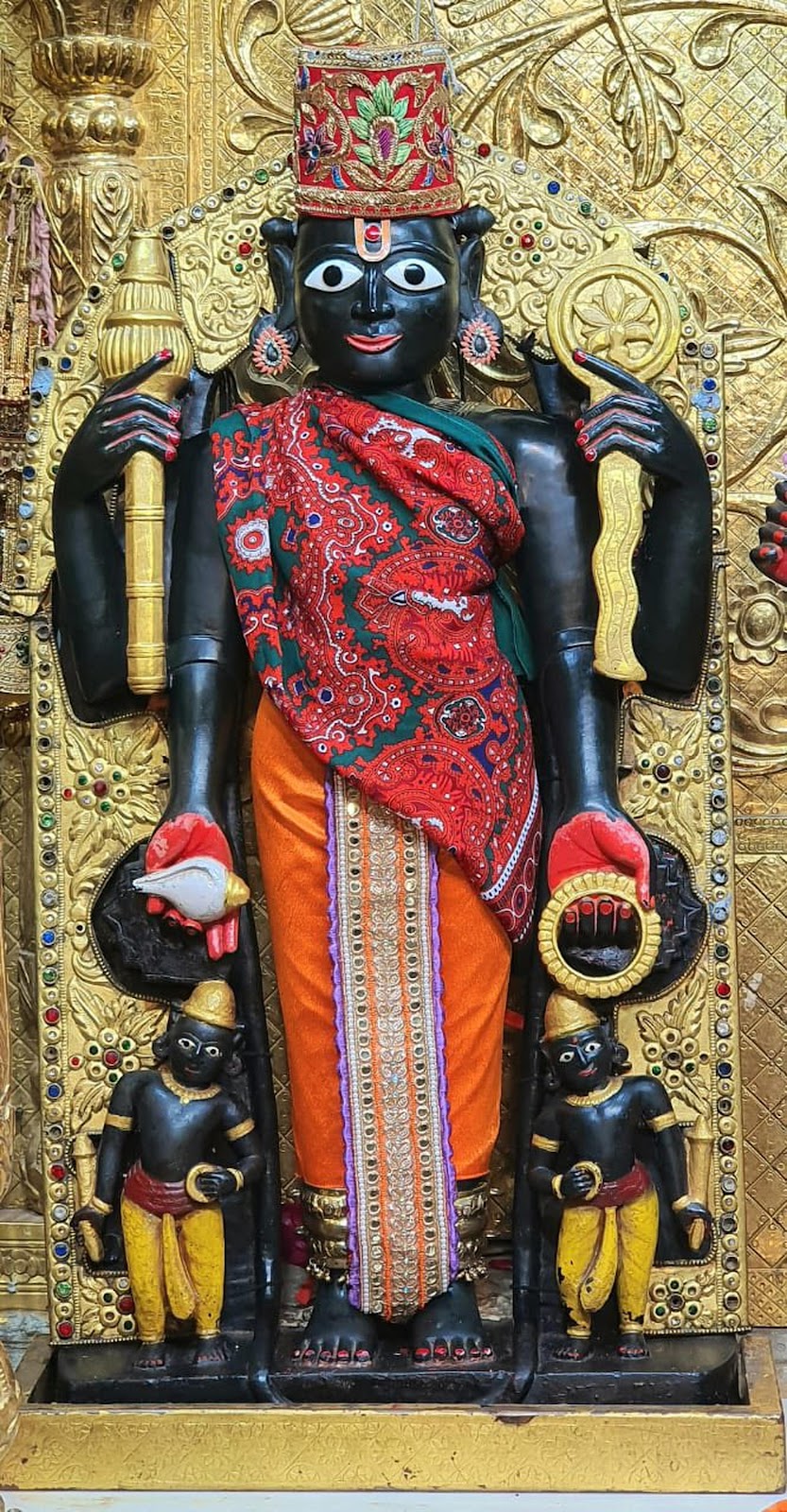
“I wish to sell these,” the artisan said, placing them before Shreeji Maharaj. “I will go now to bathe in the holy river but I shall return shortly to discuss their price.”
The artisan walked away, disappearing into the winding paths of the village. Hours passed, then days. The royal guards searched every corner of Gadhada, but the man had vanished as if into thin air.
Shree Hari turned to the bewildered sabha and revealed the mystery: “That was no ordinary man. He was a Mukta (liberated soul) from the divine Akshardham. He brought this image from the highest realm so that you may always have my darshan.”
Murti Pratishtha
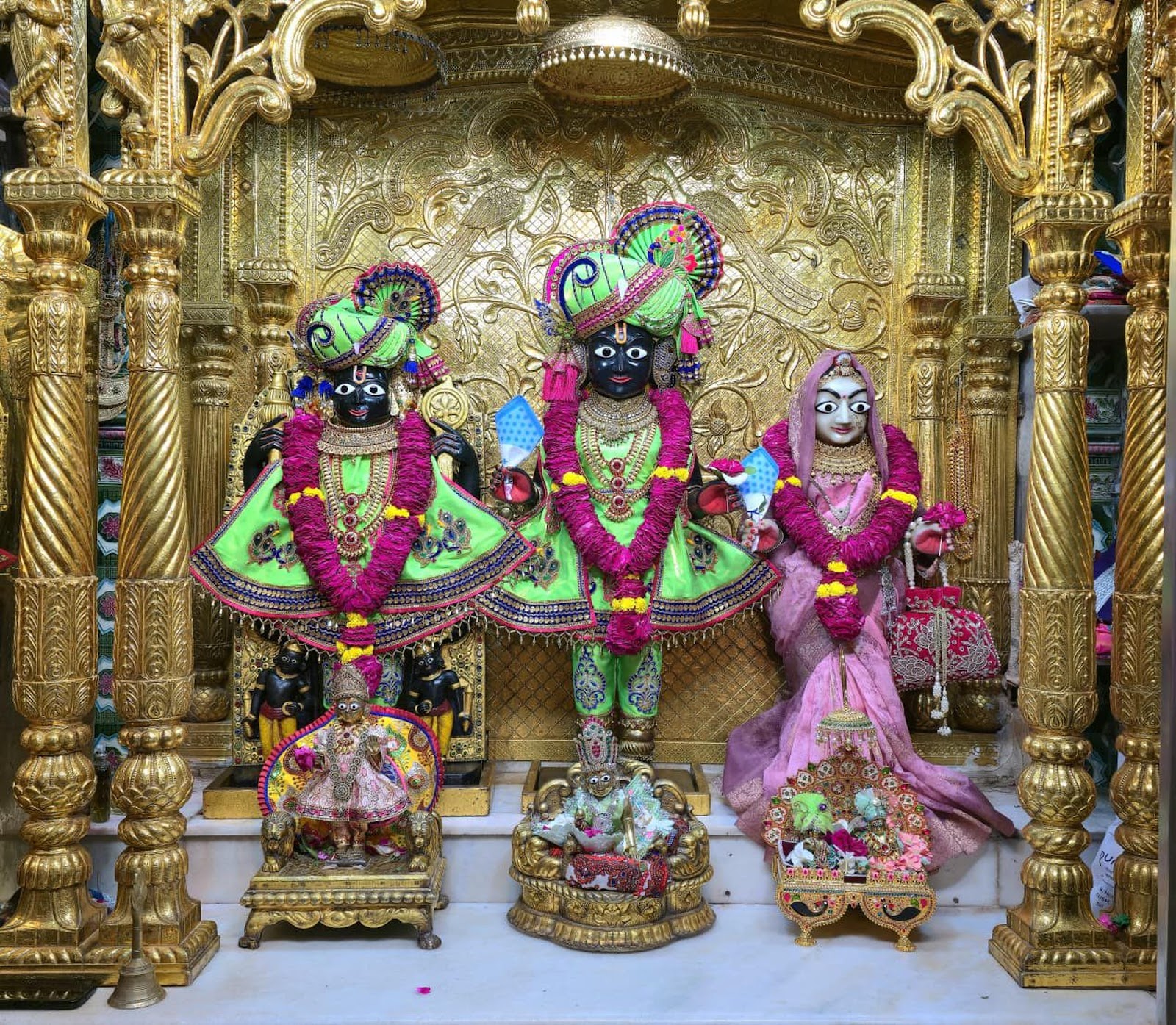
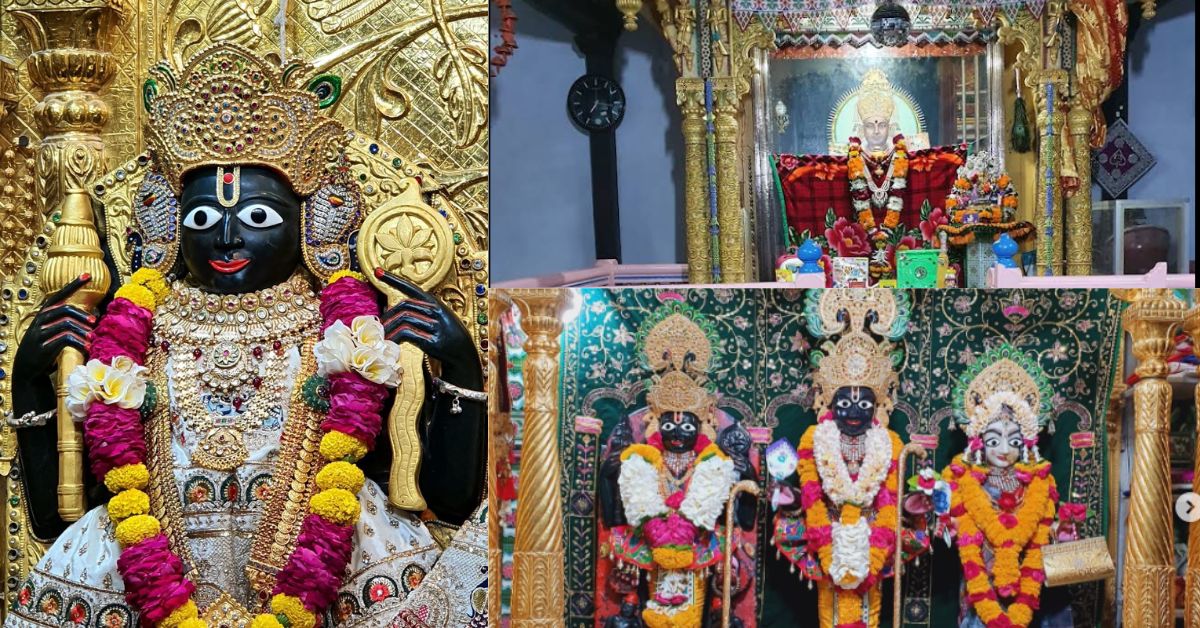
The pratishtha muhrat was set by the Brahmin Shree Ramchandra Joshi to be Fagan Vad 3 V.S. 1862 (1806 C.E.). The most learned Brahmins gathered, their voices rising in a rhythmic tide of Vedic chants. Shree Hari himself took up the mantle of the priest. With his own lotus hands, he performed the murti pratishtha vidhi of Shree Vasudev Narayan in the northern room of Dada Khachar’s darbar.
As the final rituals concluded and the first Aarti was performed, a miraculous sight unfolded. The stone of the murti seemed to dissolve into a blinding, transcendental light. The devotees looked from the murti to Shreeji Maharaj standing beside it, realizing they were one and the same.
Shreeji Maharaji then spoke to the gathering, his voice firm and divine:
“This is Vasudev Narayan. Know this to be my very soul. If you serve this murti with purity, you serve Me. I am present here, listening to every prayer and accepting every offering.”
The Rules of Murti Seva
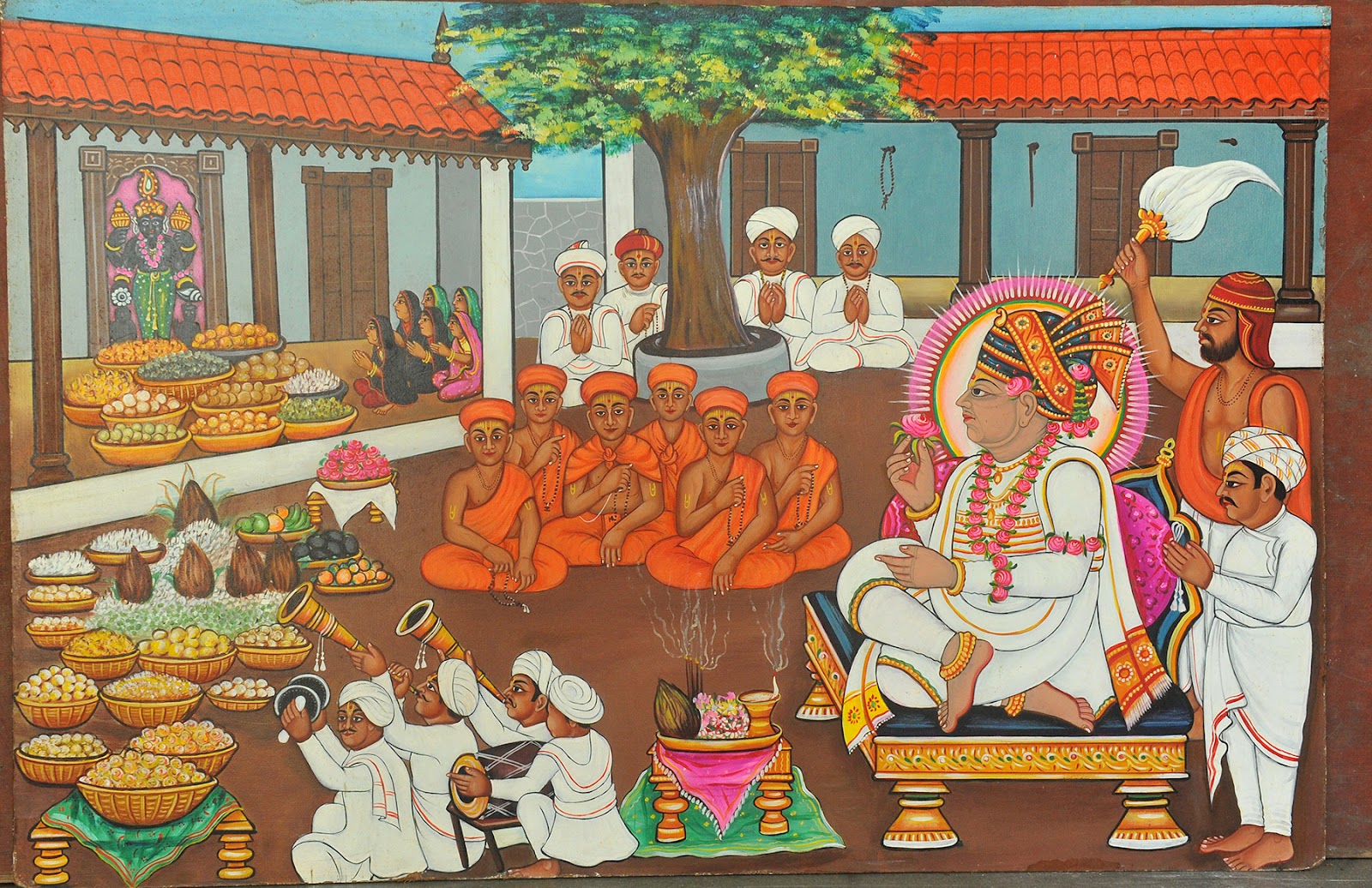
To protect the sanctity of the murti, Shreeji Maharaj delivered a profound discourse on the Dev-Aparadh (offenses against the deity). He warned that the murti was not mere stone, but a divine living being. He laid out the rules of the temple:
- The Purity of Touch: None should approach the murti without bathing, or after touching a shroud, or in a state of ritual impurity.
- The Sanctuary of Silence: No one should shout, argue, or sleep with their feet toward the murti .
- The Offering of Love: Only the freshest fruits and grains should be offered, for the murti of Bhagwan tastes the devotion within the food.
He warned that those who served with ego or impurity would find no peace, but those who served with a “clean heart and controlled senses” would find the gates of Akshardham wide open for them.
An Eternal Residence
Years later, when the main Gadhpur Mandir was built, the original room where Vasudev Narayan was first placed remained the spiritual heart of Gadhada. Acharya Shree Raghuvirji Maharaj later moved the murti into the main mandir according to Vedic rituals.
Dada Khachar’s family and the Acharyas took great care to preserve the room. Even today, devotees visit that humble room to witness the original location of the “Adi-Murti”—the first murti in the Swaminarayan Sampraday—remembering the day Shreeji Maharaj promised He would never leave the side of those who love Him.
The mahima of Shree Vasudev Narayan has been documented by Acharya Shree Viharilalji Maharaj in Shree Harililamrut Kalash 6, Vishrams 2, 3, and 6.