

After spending some time in the village of Bochasan, word reached the devotees in Vadtal that Bhagwan Shree Swaminarayan was nearby. Two devoted souls, Bapubhai (born Kuberdas) and his son Ranchhoddas, could not contain their excitement. They hurried to Bochasan and found Shree Hari at the home of Kashidas.
As they fell at His feet, they were struck by His divine presence. Looking closely at the soles of His feet, they recognized the sixteen sacred signs of Godhead. Their hearts swelled with a mixture of joy and humility. “How can we, mere ignorant souls, be in the presence of the Creator of millions of worlds?” they wondered silently.
Shree Hari, the knower of all, smiled and invited them to dine with Him, sharing His sanctified food (Prasadi) and cementing a bond of divine love.
The Vision of Akshardham
The next morning, as Shreeji Maharaj sat in a sabha, the devotees of Vadtal were blessed with a miraculous vision (Samadhi). Their souls were transported to Akshardham, the divine abode. They saw Him seated amidst palaces of wish-fulfilling gems and rows of divine trees. They realized that the person sitting before them in the village was the same Purushottam Narayan worshipped by infinite divine beings.
Awakening from their trance, they pleaded, “Maharaj, please come to Vadtal and make it Your home!” Despite warnings from others about the dangerous outlaws and thieves in Vadtal, Ranchhoddas assured Shreeji Maharaj: “No one will dare touch Your belongings in our village. We will protect Your honor.” Touched by their faith, Shreeji Maharaj promised to arrive the following day.
The Sacred Badari Tree
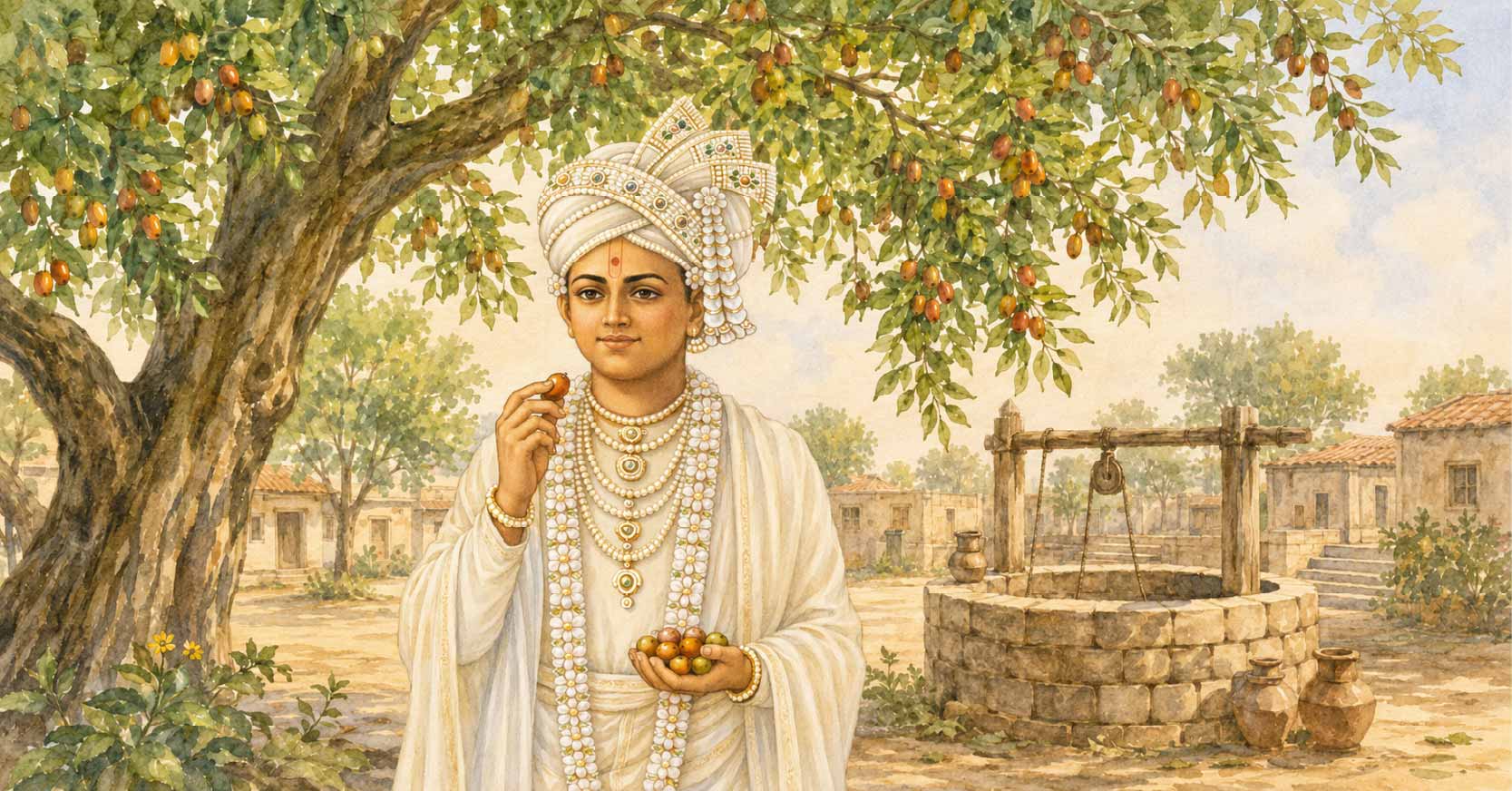
Shreeji Maharaj arrived in Vadtal and stopped near a beautiful Badari (Jujube) tree by a well named Ganga Jaliyo. He bathed, performed His prayers, and ate the fruits of the tree, praising its beauty repeatedly.
Bapubhai shared a prophecy: “A wandering monk once told us that this spot was sacred and that God Himself would one day meet us here.” Shreeji Maharaj smiled, knowing well that this very spot would one day become a great center of pilgrimage. He then moved into the village, staying at Bapubhai’s home, where he spent His days teaching wisdom and his nights resting on a simple bed in the courtyard.
The Test of Joban Pagi
However, not everyone in Vadtal was moved by devotion—at least, not yet. Joban Pagi, a notorious dacoit whose name struck fear into the hearts of kings, heard of the “Bawa” (monk) staying with the Patidars.
“They call him God,” Joban told his brother Sundar. “Let’s see his power. Tonight, we will steal his horse. If he is truly God, let him stop us.”
Sundar, who had already seen Shreeji Maharaj’s radiant form, refused to help. “He is a miraculous personality, Joban. Do not provoke such a great man.”
Stubborn and proud, Joban went alone at midnight. As he tried to break into the courtyard, he was confronted by Raiji (one of Bapubhai’s sons), who stood guard with a sword.
“You won’t gain anything by provoking us, Joban,” Raiji warned.
Joban sneered, “I only want to see his ‘power’. If you stop me today, I will simply find him at the next village.” Joban retreated for the night, but the seed of a future transformation was sown. He watched as Shreeji Maharaj eventually departed after four days of bliss, leaving the villagers of Vadtal weeping with the pain of separation, begging Him to return and make their village His eternal home.
This prasang has been documented by Acharya Shree Viharilalji Maharaj in Shree Harililamrut Kalash 5, Vishram 19.