
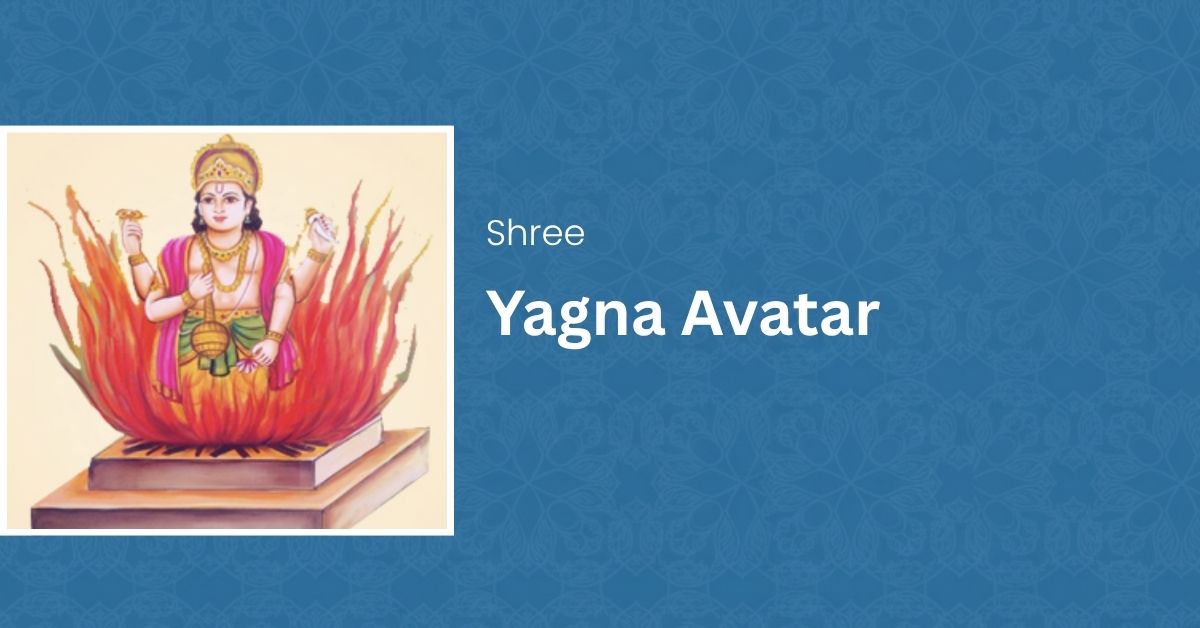

Among the countless incarnations of Bhagwan Vishnu that graced the early stages of creation, the Yagna Avatar stands out as a unique manifestation of divine purpose. While Bhagwan appeared in various forms to grant the wishes of the prajapatis (progenitors) who performed intense penance for the expansion of the universe, the pace of creation remained gradual. To accelerate this development and fulfill the foundational goals of the cosmos, Bhagwan Vishnu manifested in the form of Shree Yagna Dev.
The Divine Manifestation
The appearance of Bhagwan Shree Yagna occurred during the Swayambhuva Manvantara (first cosmic age). Historical scriptures from the ancient eras detail an interesting familial covenant: when Manu gave his daughter, Aakruthi, in marriage to the prajapati Ruchi, he laid a specific condition—any son born to them would be raised by Manu himself.
In time, the household of Aakruthi and Ruchi was blessed with a son of divine brilliance. In accordance with the earlier agreement, Manu took charge of his upbringing. This prince was none other than Bhagwan Shree Yagna, who brought immense joy and prosperity to the lineage.
The Wisdom of Yagna
Upon growing up, Bhagwan Shree Yagna introduced and systematized various forms of yagna (sacred rituals). He demonstrated that these rituals were not merely ceremonies, but potent tools for rapid social, spiritual, and material development.
Under His guidance, individuals achieved unimaginable success in their personal and societal endeavors. Witnessing the transformative power of these rituals, society honored the prince of Ruchi with the title “Yagna.” Hence, He is celebrated as the architect of the Yagna tradition.
Family and Divine Lineage
Bhagwan Shree Yagna entered into matrimony with a noble maiden named Dakshina. Their union was blessed with twelve sons, collectively known as the Dvadash Yama. These twelve sons were revered as Yama-Devas, further strengthening the divine order.
The Reign as Indra
Recognizing the countless blessings and the cosmic order established by Bhagwan Shree Yajna, devtas and human beings requested Him to accept the mantle of Indra.
Accepting this responsibility for the greater good, Bhagwan Yajna took the throne of Indradev. His reign served two primary purposes:
- The Eradication of Evil: To systematically weaken and vanquish the demonic forces (asuric shaktis) threatening peace.
- The Enrichment of Virtue: To safeguard and grow the “imperishable storehouse” of divine powers (daivi shaktis).
Bhagwan Yagna served as the protector and administrator of the heavens throughout the duration of the Swayambhuva Manvantara, ensuring stability and prosperity across the heavens.