
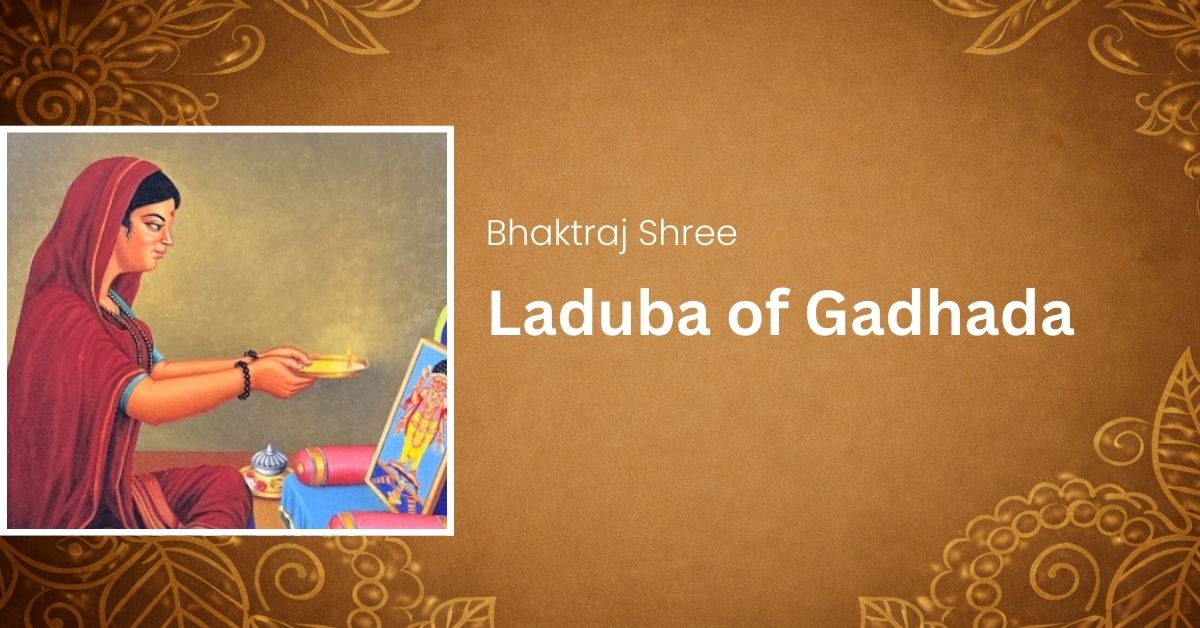

Ebhal Khachar, the ruler of Gadhada, had five children: Jivuba, Laduba, Panchuba, Nanuba, and the youngest son, Uttam—whom everyone affectionately called Dada Khachar.
The fortunes of this family were truly blessed, as they received the opportunity for immense service to the Purna Purushottam Bhagwan Shree Swaminarayan. They performed that service and devotion with selfless intent and unwavering faith. In the history of the Swaminarayan Sampraday, this family became a beacon of inspiration. In matters of sacrifice, penance, and service, ordinary devotees could never equal the great women, sankhya yogis, and satis who graced the Swaminarayan Sampraday. Among them, Laduba’s name holds a prominent place in the Sampraday.
Laduba was the younger sister of Jivuba. From childhood, she appeared to be made of a different mold; devotion was the primary melody of her life. In the village of Kariyani, at the home of Macha Khachar, Ebhal Khachar and his family received the first opportunity for the darshan of Shreeji Maharaj. From that moment, Laduba decided to wed the Almighty and become Akhand Saubhagyavati (eternally wedded to God). Despite being an ideal of beauty, virtue, and intellect, and devoted to the ideals of penance, renunciation, and nishkam dharma (selfless duty), Ebhal Bapu had initially compelled her to enter into a traditional marriage. She was married to Khoda Dhadhal of Botad. However, seeing her firm resolve to be dedicated to the service of Bhagwan Shree Swaminarayan, her in-laws joyfully gave her their consent to serve Shreeji Maharaj.
Laduba was also known by the name Lalita, and she kept everyone pleased through her seva and bhakti. Although she was the daughter of a royal court and had no shortage of servants for household chores, Laduba would perform even the smallest seva herself. Seeing her devotion and faith, Maharaj would be immensely pleased. Addressing the women, He would instruct, “Learn virtues like these two sisters. For their immense faith in performing seva is such that even Mount Meru would bow before it!”
There was always a sweet rivalry between the two sisters regarding who would perform seva. Therefore, Maharaj divided the responsibilities for cooking and festivals. Jivuba would manage the festivals of the Sud Paksh (bright lunar fortnight), and Laduba would celebrate the festivals of the Vad Paksh (dark lunar fortnight). Laduba lived a life of great penance. She would weigh and eat only half a sher (a traditional unit of weight) of grain daily. She kept her finest ornaments safely reserved for Maharaj. She even offered her entire share of property to Maharaj, officially documenting the donation on a copper plate.
An embodiment of sacrifice, service, and purity, Laduba eventually left her mortal body in Gadhpur. Offering a tribute of praise to both sisters in the Bhaktchintamani, Nishkulanand Swami wrote:
“Jaya Lalita jana mota, satsangma shiromani; Pritye valam vashkarya, eni kahiye motap shu ghani!”
Because of their immense premlaxan devotion, sharanagati, and faith in Bhagwan’s swarup, the names of Laduba and Jivuba will forever echo in the Swaminarayan Sampraday.