
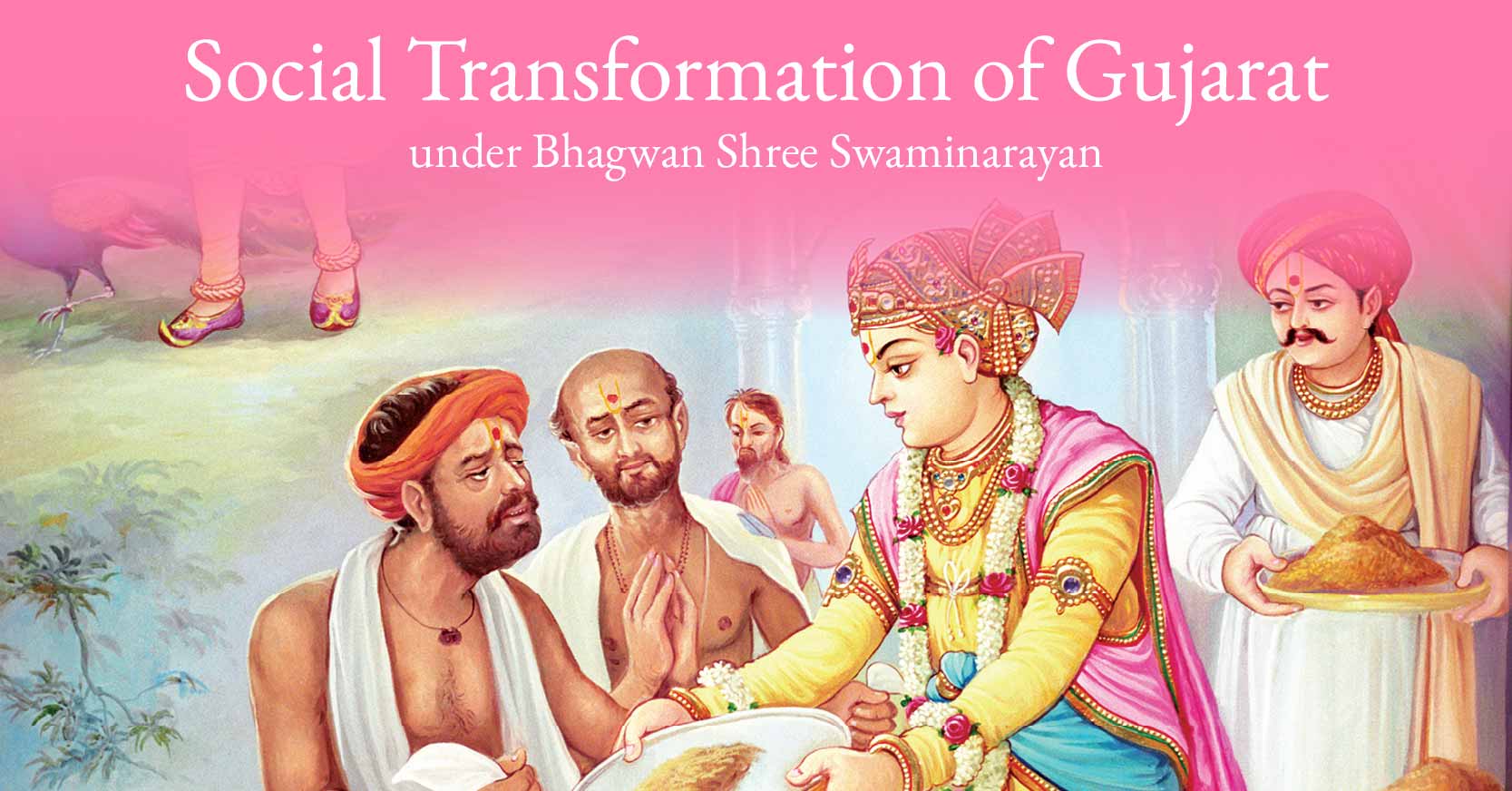

After the arrival of British rule in Gujarat and the historic meetings between Bhagwan Shree Swaminarayan and prominent figures like Bishop Heber, Sir John Malcolm, and Sir Andrew Dunlop, the obstacles facing the Swaminarayan Sampraday began to diminish. Shreeji Maharaj’s influence and prestige grew immensely, making the mission of the santo much easier.
1. Social Reforms and the Eradication of Evil Customs
The impact of the Sampraday led to a significant decline in open gambling dens and liquor joints. Those still involved in such activities began to operate secretly, staying away from the santo.
- Female Infanticide: The practice of Dudh-piti (killing newborn girls) among the ruling Darbar classes was completely abolished by those who surrendered to Shreeji Maharaj. They not only stopped the practice themselves but ensured their families did as well.
- Addictions: Addictions to opium, cannabis (ganja), and tobacco vanished the moment a devotee put on the Kanthi.
- Sati Pratha: The prevalence of the Sati (widow immolation) practice dropped drastically.
- Women’s Welfare: Women who were previously mistreated or burned due to lack of dowry (Paithan) found great relief. The trade of selling daughters (Kanya-Vikray) was severely crippled.
- Animal Welfare: Slaughterhouses were largely shut down. Adultery, once rampant, was labeled a supreme sin; Shreeji Maharaj showed people the horrors of hell (Jampuri) through Samadhi (divine trance) to liberate them from such vices.
2. Education and Economic Upliftment
Landlords, moneylenders, and traders who used to cheat the illiterate masses were dealt a heavy blow by Shreeji Maharaj’s push for education.
- Occupational Shifts: Many fishermen abandoned their trade and took up farming according to Maharaj’s commands.
- Hygiene and Health: Devotees began waking up before sunrise to bathe and perform rituals. By stopping the habit of eating food cooked by anyone or anywhere, the general health of the Satsangis improved.
- Honest Labor: Former thieves and looters were now seen everywhere performing honest manual labor, making villages self-reliant.
- Ahimsa: Non-violent Yagyas replaced bloody sacrifices, stopping the killing of innocent animals.
3. Overcoming Superstition
Those who exploited the superstitious through black magic, threads, and charms (Jantar-Mantar) lost their foothold. Devotees began chanting the Narayan Kavach and Hanuman Stotra to protect themselves from ghosts and evil spirits.
- The holy water sprinkled by the saints caused “ghosts and demons” to flee, resulting in the retreat of witch doctors (Bhuvas).
- People traded gambling and dance halls for temples. Instead of corrupting their minds with vulgar plays (Bhavai), they found peace and satisfaction in listening to spiritual discourses (Katha).
4. The Organization of the Santo
Shreeji Maharaj organized his santo into groups (Mandals) of twelve. Each group was assigned specific villages to look after, headed by a lead sadhu.
- Governance: Three or four such mandals operated in a region, and their members reported to a Mahant (head sant), who in turn provided updates to Bhagwan Shree Swaminarayan.
- Ascetic Lifestyle: Santo traveled to see Maharaj every month or two for rejuvenation. They never stayed in one place for long. They traveled on foot, regardless of heat, cold, or rain. They ate simple food, avoiding all delicacies.
5. Forgiveness and Perseverance
The most powerful tool of the saints was their forgiveness.
- They never grew angry at those who insulted, abused, or even beat them. Instead, they blessed their attackers, praying that Bhagwan would give them wisdom.
- Examples of Grit: In one instance, a woman struck a sadhu with a wet mop while he was asking for alms. The sadhu simply used the fibers of that mop to make wicks for a lamp and prayed for her salvation.
- In another case, a farmer hit a sadhu with a bullock-stick, breaking his head. That same evening, the sadhu —with a bandage on his forehead—went back to the farmer as he sat in the village square to give him spiritual knowledge, eventually making him a devotee.
6. Grassroots Outreach
Santo didn’t wait for people to come to them. They went to the farms, reached out to laborers during their lunch breaks, and preached to farmers even while they were plowing. They visited the homes of notorious thieves to counsel their wives and families, showing them a path out of a life of crime.Through this relentless, compassionate, and disciplined effort, the foundation of the Swaminarayan Sampraday became unshakable, leading to a society that was pure, honest, and awakened to humanity.