
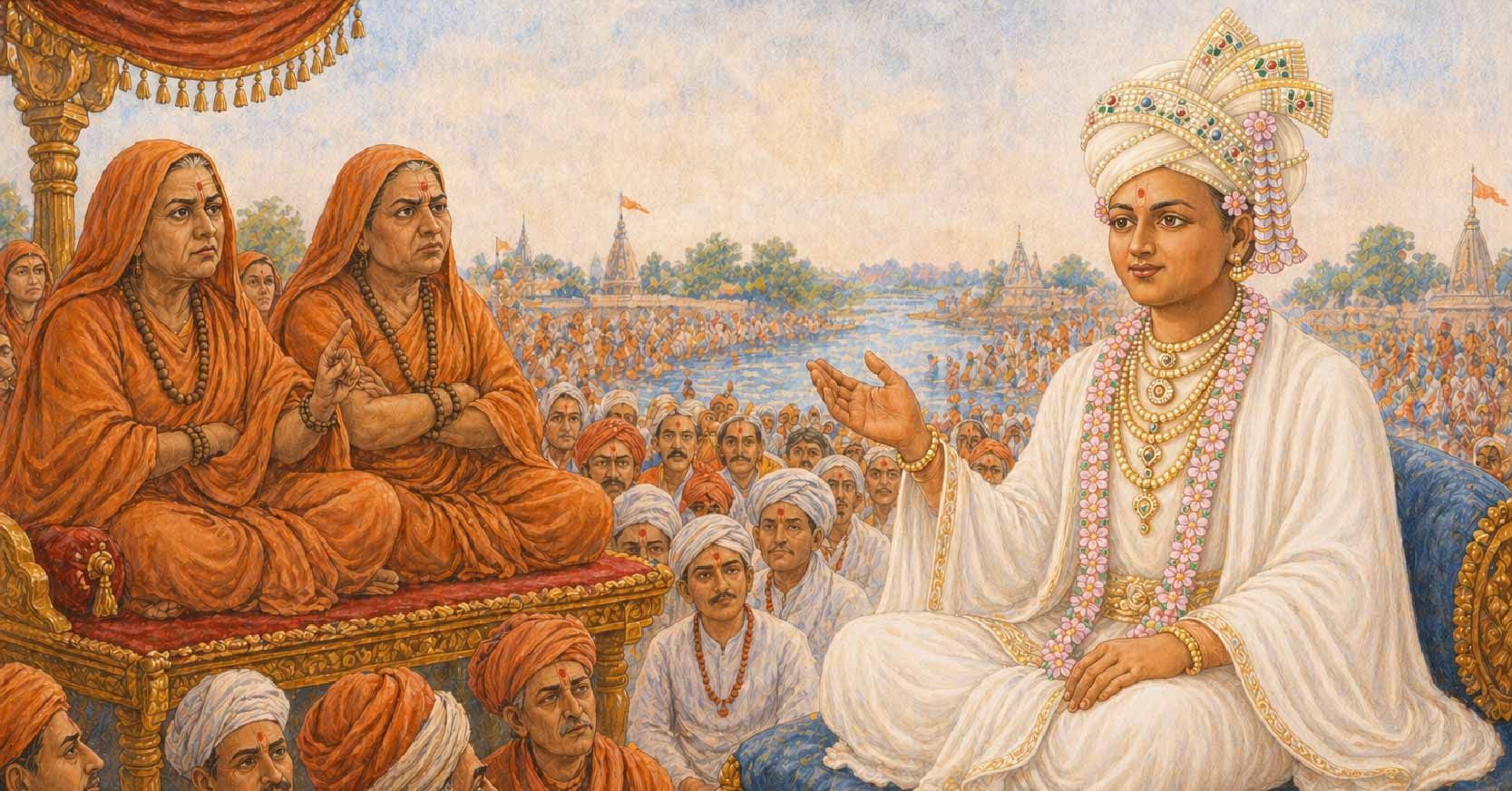

Once, Bhagwan Shree Swaminarayan arrived in the village of Kalvani from Loj to celebrate the auspicious festival of Prabodhini Ekadashi. Letters had been sent to every corner of Gujarat, and thousands of devotees, along with senior santo like Muktanand Swami, converged on the village.
The festival was a sea of devotion. On the morning of Ekadashi, Shree Hari led the sabha to the river for a holy bath, the air filled with the sound of sacred chants and kirtans. However, amidst this divine celebration, a conflict was brewing that would test the very structure of the satsang.
The Arrival of the Proud Ascetics
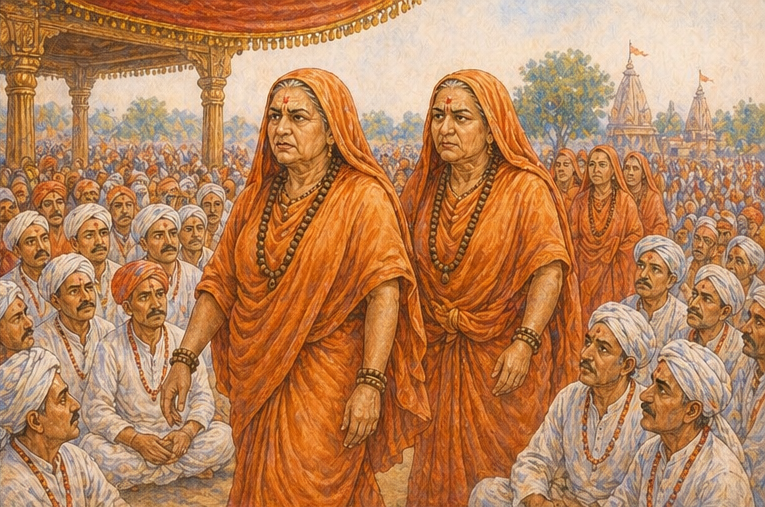
Into this grand assembly walked two women: Harbai and Valbai. They were no ordinary devotees; they were seasoned ascetics who had been disciples of Atmanand Swami and later Ramanand Swami. They were elderly, wore saffron robes, and carried the weight of decades of renunciation.
However, they carried something else as well—profound spiritual pride.
Despite being female ascetics (sankhya-yogis), they ignored the boundaries of the satsang. They marched straight into the male sabha, pushing past devotees, and sat audaciously upon the Gadi (throne), surrounded by their own circle of followers.
The Confrontation
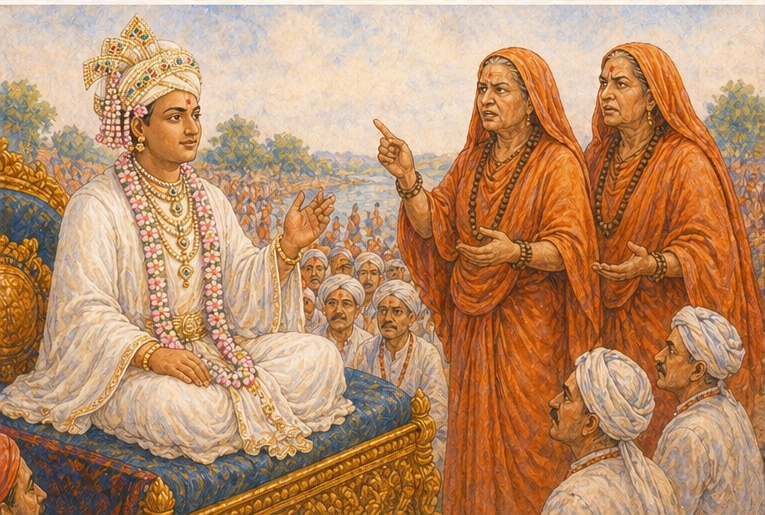
Shree Hari looked upon them with compassion but firm resolve. He addressed them directly:
“Why do you behave this way? If you have taken the vows of a renunciant, why do you seek the company of men? If you truly want to be part of this Satsang, you must follow its holy traditions. Do not preach to men, and do not mingle with them.”
The women, blinded by their seniority, snapped back. They argued that they were “Urdhvareta” (perfectly celibate) and “Brahmvetta” (knowers of Brahm). They claimed that because they were old and saw no difference between “flesh and fat,” the rules did not apply to them. They even insulted Shree Hari, calling Him a “newcomer of yesterday” compared to their years of service.
“If you try to stop us,” they threatened, “we will leave and start our own sect.”
The Wisdom of Shree Hari
Shree Hari explained a fundamental truth of spiritual life: The “Ghee and Fire” Principle.
He taught that just as ghee melts when placed near fire, the soul can be swayed by the senses regardless of how much knowledge one possesses. He pointed to senior paramhanso like Muktanand Swami, who, despite being masters of the senses, strictly followed the rules to set a proper example for the world.
He warned that pride is the greatest enemy. When a disciple’s ego is hurt, their mind “turns,” and they begin to see flaws in their Guru where none exist.
The Separation
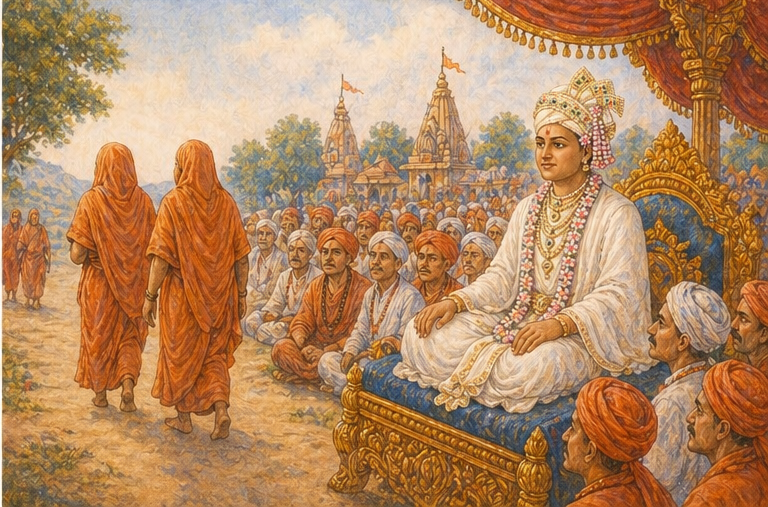
Seeing that Harbai and Valbai were unwilling to humble themselves or follow the maryada of the Sampraday, Shree Hari made a difficult decision. To protect the integrity of the satsang and prevent other devotees from being misled by their arrogance, He excommunicated them.
True to their word, the women left in a fit of rage. They traveled to the village of Tramba, where they set up their own sect, sitting on thrones and proclaiming their own greatness. Though they gained some followers by misleading the “innocent and clay-like” minds of the simple-hearted, they had cut themselves off from the “Ganges” of true spiritual liberation.
The Lesson
A disciple who turns against a Guru who gave them their name and fame is like a snake that bites the hand that fed it milk. Downfall in satsang begins with pride, leading to the search for flaws in the divine, and ends in the ruin of one’s soul.
With the sabha purified of this discord, the festival concluded. Shree Hari, ever-gracious, then accepted the humble invitations of devotees from Akha and Piplana, continuing His journey to spread peace and dharma.
This prasang has been documented by Acharya Shree Viharilalji Maharaj in Shree Harililamrut Kalash 5, Vishram 12.