
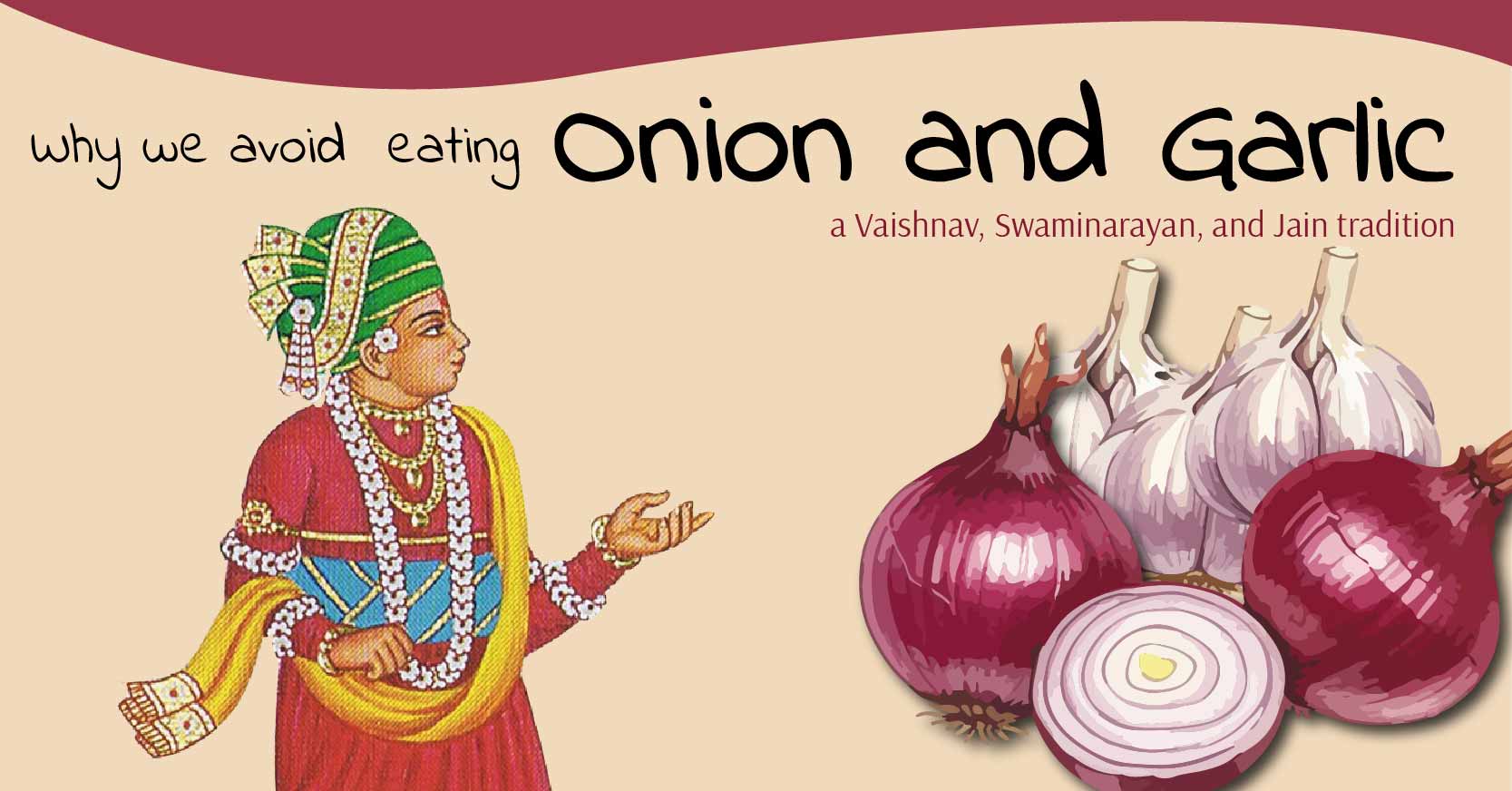

In the Swaminarayan Sampraday—as well as in Jainism and Vaishnavism—eating onion and garlic is strictly avoided. This is also why in any Hindu temple, you will never find onion and garlic offered in prasad or thaal. This isn’t just a random rule; Bhagwan Swaminarayan specifically guided his followers to avoid it in the Shikshapatri, and the Shikshapatri Bhashya by Shatanand Swami provides a deeper look into why.
1. The “Vibe” and Physical Presence
The most immediate issue with onion and garlic is its strong odor.
- The Scent: It lingers on the breath, in sweat, and even in body odor for a long time.
- The Question: If something causes such a persistent, unpleasant smell, does it truly fit the lifestyle of a seeker who aims for cleanliness and refinement? For a Satsangi, personal purity is key.
2. Effects on Mind and Temperament
In Ayurveda and science, food isn’t just fuel; it affects your personality. Onion and garlic are considered Tamasic (agitating/lethargic) and Rajasic (stimulating/passionate) respectively
- Anger: It can make a person more prone to irritability and losing their temper over small things.
- Restlessness: It creates an internal “heat” that leads to excitement and loss of composure.
- Spiritual Obstacle: It fuels Rajas (passion) and Tamas (darkness/inertia), which can act as a barrier to living a calm, ethical, and spiritually focused life.
3. Impact on Physical and Vital Health
The text highlights several ways onion and garlic can throw the body out of balance:
- Pitta Imbalance: Garlic is naturally “hot.” It increases Pitta (acidity/heat), which can lead to a short fuse and general agitation.
- Impulse Control: It is known to increase physical desires and “Kama” (lust), making it harder to maintain self-control, focus, and Brahmacharya (disciplined living). This is why it is especially recommended that young, unmarried students avoid it to keep their minds clear.
- General Health: Excessive use can lead to internal inflammation, stomach irritation, ulcers, and even issues like insomnia or constant thirst.
4. The “Incompatible Foods” (Viruddha Ahaar)
One of the biggest warnings involves how garlic reacts with other foods. In Ayurveda, mixing certain ingredients creates toxins.
- Dairy: Garlic should never be taken with milk or milk products (including tea, coffee, ice cream, or buttermilk).
- Jaggery (Gur): It shouldn’t be mixed with jaggery—often found in Gujarati dals, shak, or pickles.
- The Risk: These “bad combinations” are believed to be a major cause of skin issues, ranging from simple rashes to more severe conditions like psoriasis or vitiligo.
5. Modern-Day Application: Beyond the Mandir
You might think these rules only apply when you’re sitting in a Sabha, but the science of “you are what you eat” shows up in some surprising modern professions.
- Social & Professional Etiquette: In the modern corporate world, “Garlic Breath” is often cited as a major distraction during interviews, high-level meetings, or networking events. By following a No-Onion-No-Garlic lifestyle, you are essentially “pre-cleared” for any close-contact professional setting.
The “Gut-Brain” Connection: Modern science is just now catching up to what Ayurveda called the Rajasic and Tamasic effects. We now know the gut is our “second brain.” Heavy bulb vegetables like onions and garlic can cause fermentation and gas in the gut, which leads to “brain fog” or physical discomfort that pulls your focus away from your studies or your meditation.
The Bottom Line
Do onion and garlic have benefits? Yes, it is often cited as being good for gas or lowering cholesterol. However, the Swaminarayan philosophy looks at the total impact.
When you weigh the small medicinal benefits against the potential for anger, loss of self-control, physical ailments, and the spiritual “fog” it creates, the downsides far outweigh the perks.For someone on the path of Satsang, avoiding onion and garlic is a small choice that leads to a much calmer, cleaner, and more disciplined life.