
The Divine Gift and Early Mandir (1836 C.E.)
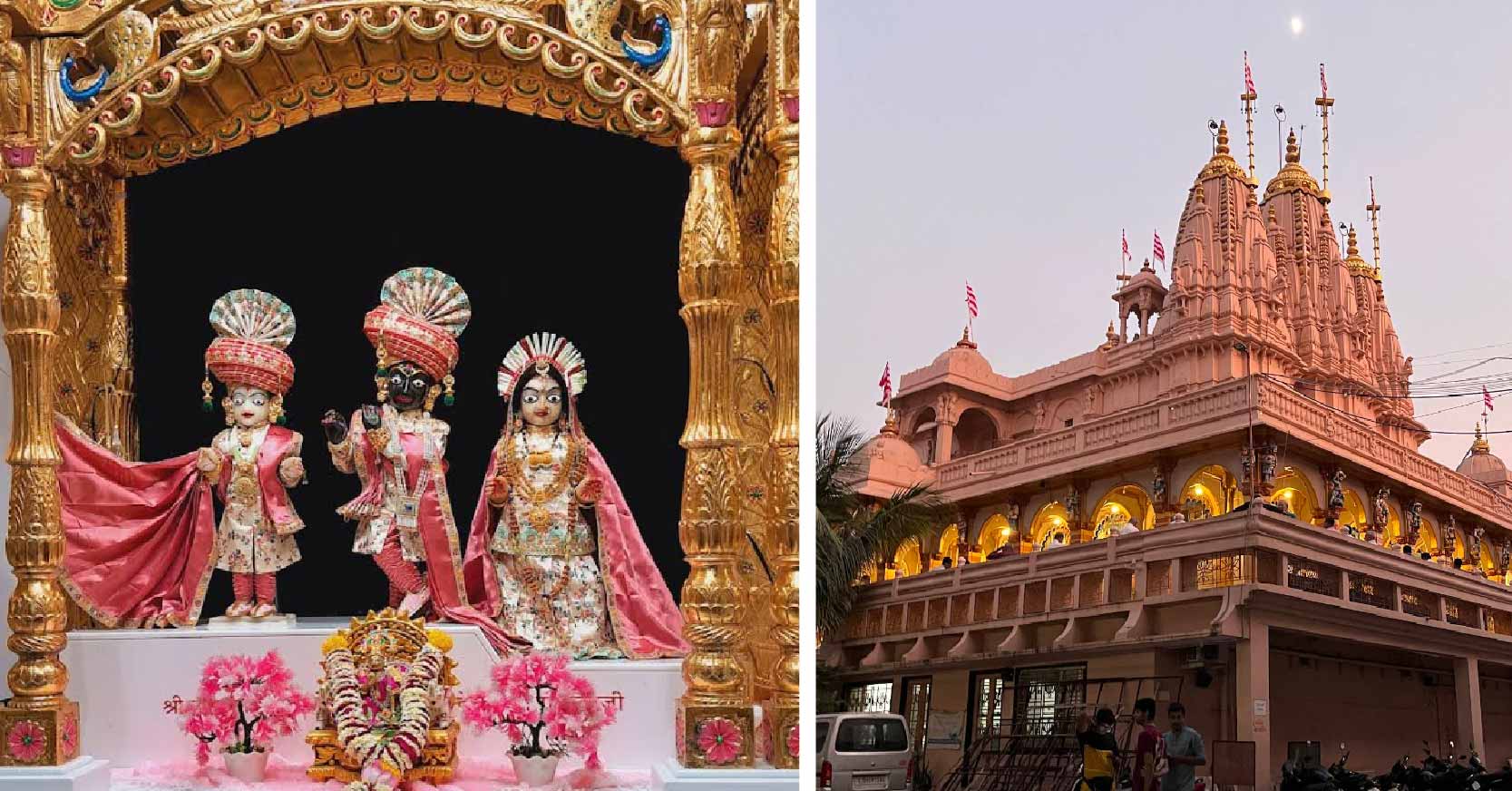
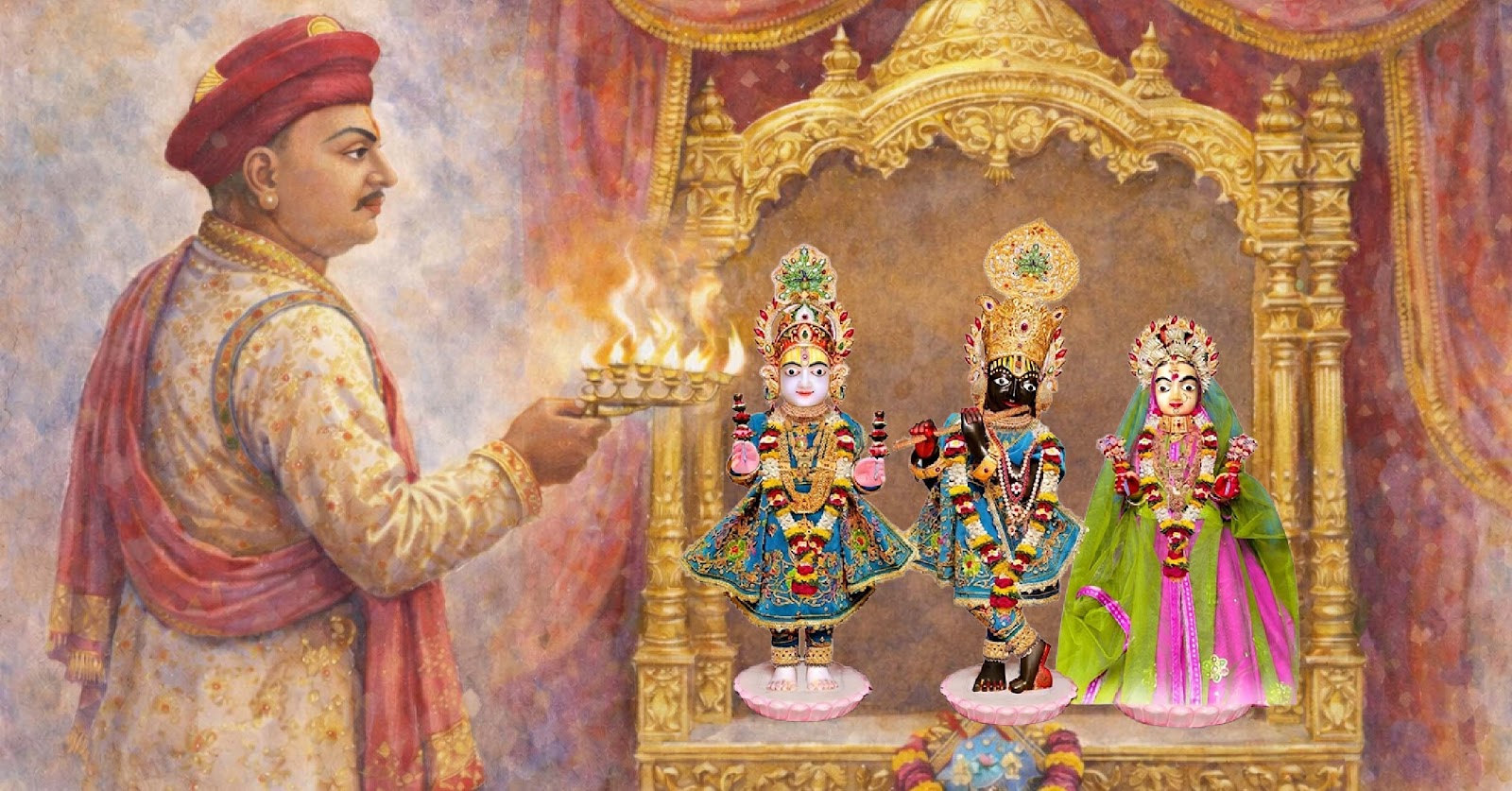
The divine story begins with the devotees of Surat traveling to Gadhpur to express their heartfelt wish to Bhagwan Shree Swaminarayan: they desired to construct a grand mandir and requested murtis for installation. Pleased by their devotion, Shreeji Maharaj gifted them stone murtis of Shree Radhikaji and Shree Radhavihari Dev. He commanded them: “Install these murtis alongside the murti of Lalji which I have given.”

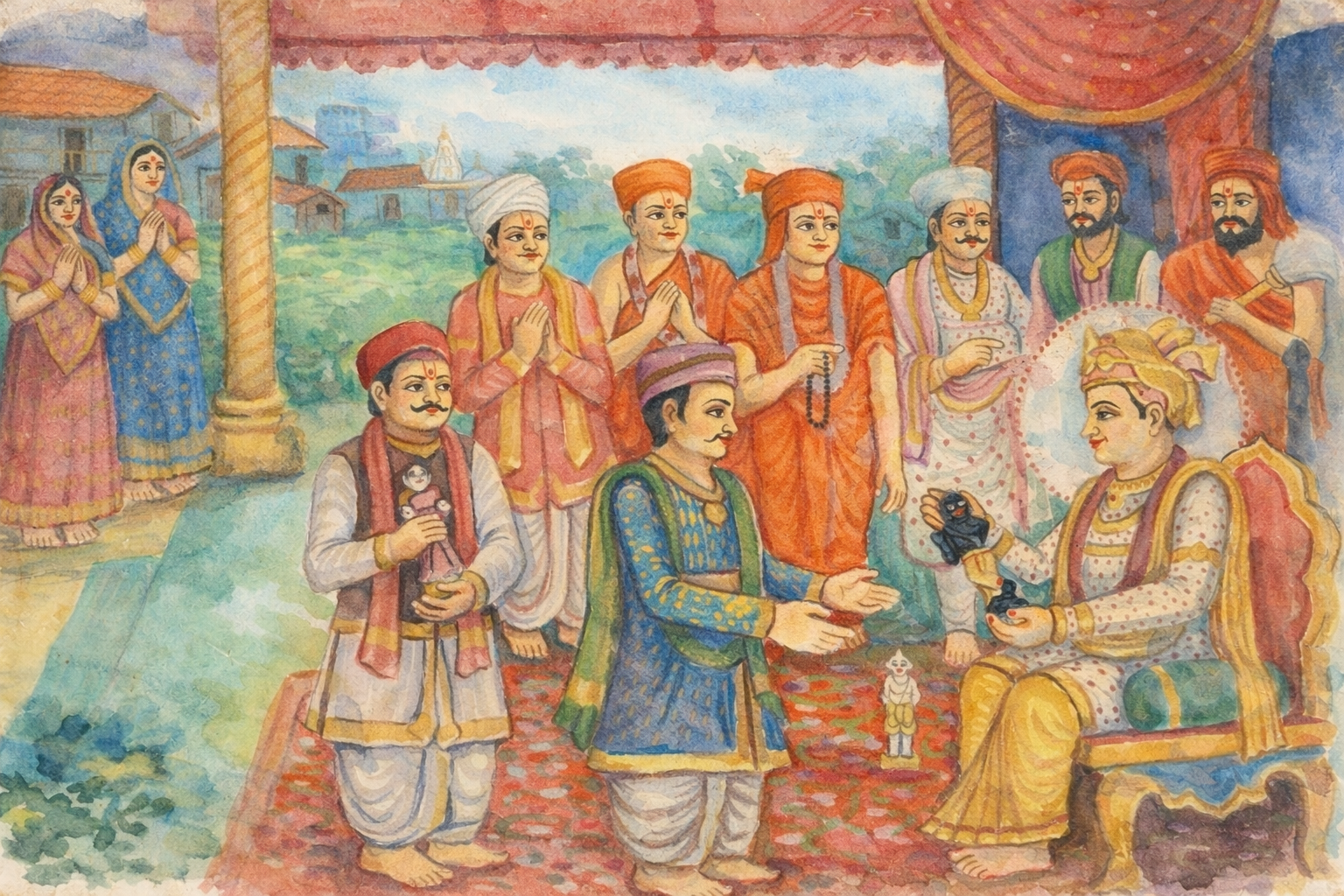
Prior to His return to Akshardham, Shreeji Maharaj entrusted Acharya Shree Raghuvirji Maharaj with the responsibility of installing these murtis in Surat along with His own divine swarup. Following this agyna, Raghuvirji Maharaj instructed Nityanand Swami to oversee the construction.
To ensure the murti pratishtha was not delayed, Nityanand Swami completed the initial mandir with remarkable efficiency, also designing it so it could be easily expanded in the future. On Vaishakh Sud 5, V.S. 1892 (1836 C.E.), H.H. 1008 Acharya Shree Raghuvirji Maharaj, accompanied by senior Paramhansas such as Gopalanand Swami, Shukhanand Swami, and Nityanand Swami, performed the pratishtha of:
- Shree Radhavihari Dev and Shree Radhikaji (sanctified by Shreeji Maharaj).
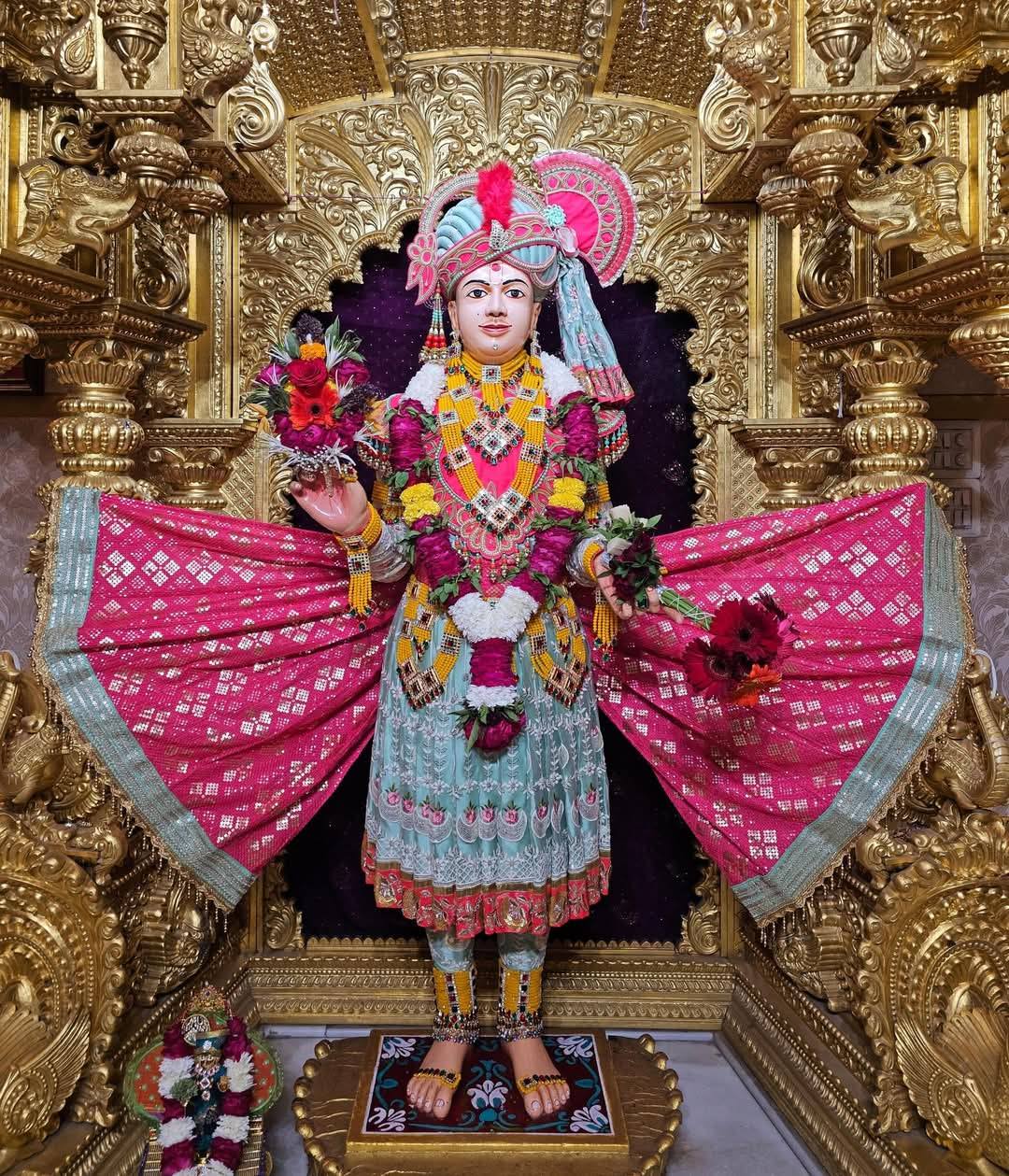
- Shree Narayanmuni Dev: This murti of Bhagwan Shree Swaminarayan was prepared by local artisans and remains unique in the Sampraday as the only murtiman swarup known by the name given by Sadguru Shree Ramanand Swami.
The Vision for Expansion and Gangaram Sheth’s Sacrifice
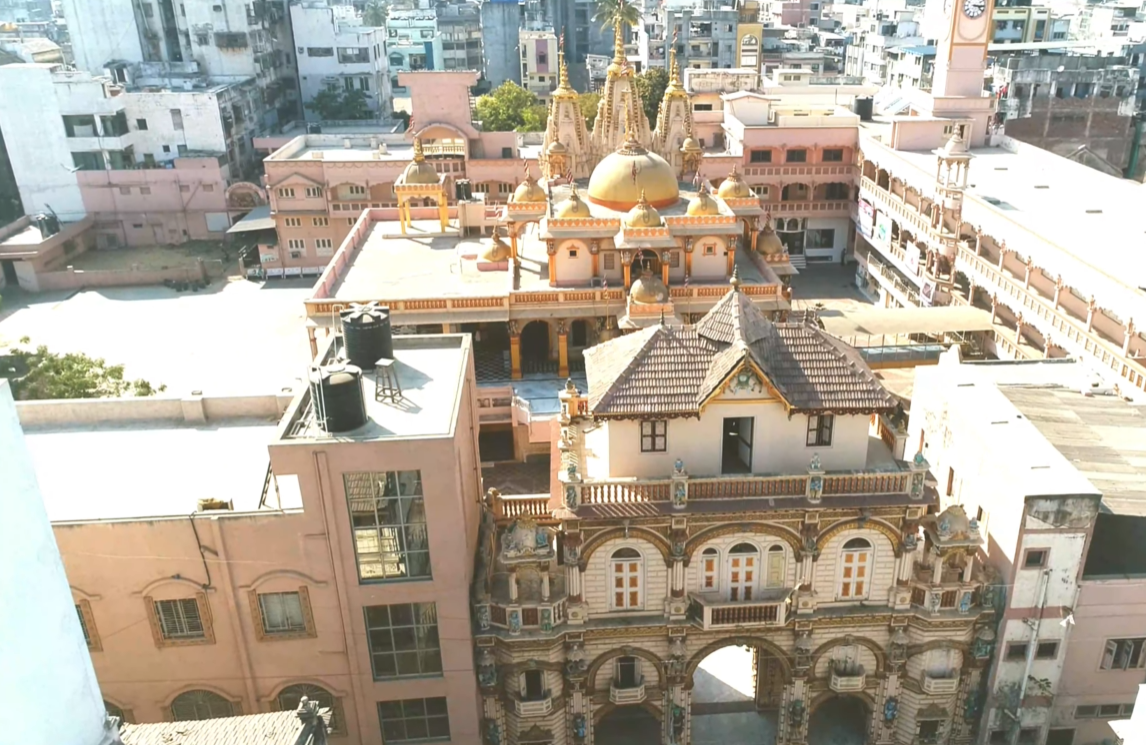
The divine presence of Narayanmuni Dev drew such immense crowds that the original mandir soon became too small to accommodate the growing number of devotees. The decision was made to convert the structure into a grand shikharbandh mandir.
The expansion was fueled by the extraordinary sacrifice of Gangaram Sheth, the son of Laxmichand Sheth. Having no children, Gangaram sought his father’s permission to donate his entire wealth to the mandir renovation. His selfless act inspired his family members, who also contributed significantly to the cause.
In V.S. 1926, during the Kartik Samaiyo, the Mahant of the mandir, Shunyatitanand Swami, traveled to Vadtal to seek the blessings and official agyna (command) of H.H. Acharya Shree Bhagwatprasadji Maharaj. Moved by the scale of the project, Maharajshree sent Pavitranand Swami and a dedicated group of 40 Sadhus to assist in the seva.
A Divine Command and Re-installation
During the construction, Bhagwan Shree Swaminarayan appeared in a divine vision to Pavitranand Swami. Maharaj revealed: “Gangaram’s physical self will not be on Earth much longer. Therefore, to complete his wish, quickly complete the main part of the mandir and have murti pratishtha completed, such that he can have darshan.”
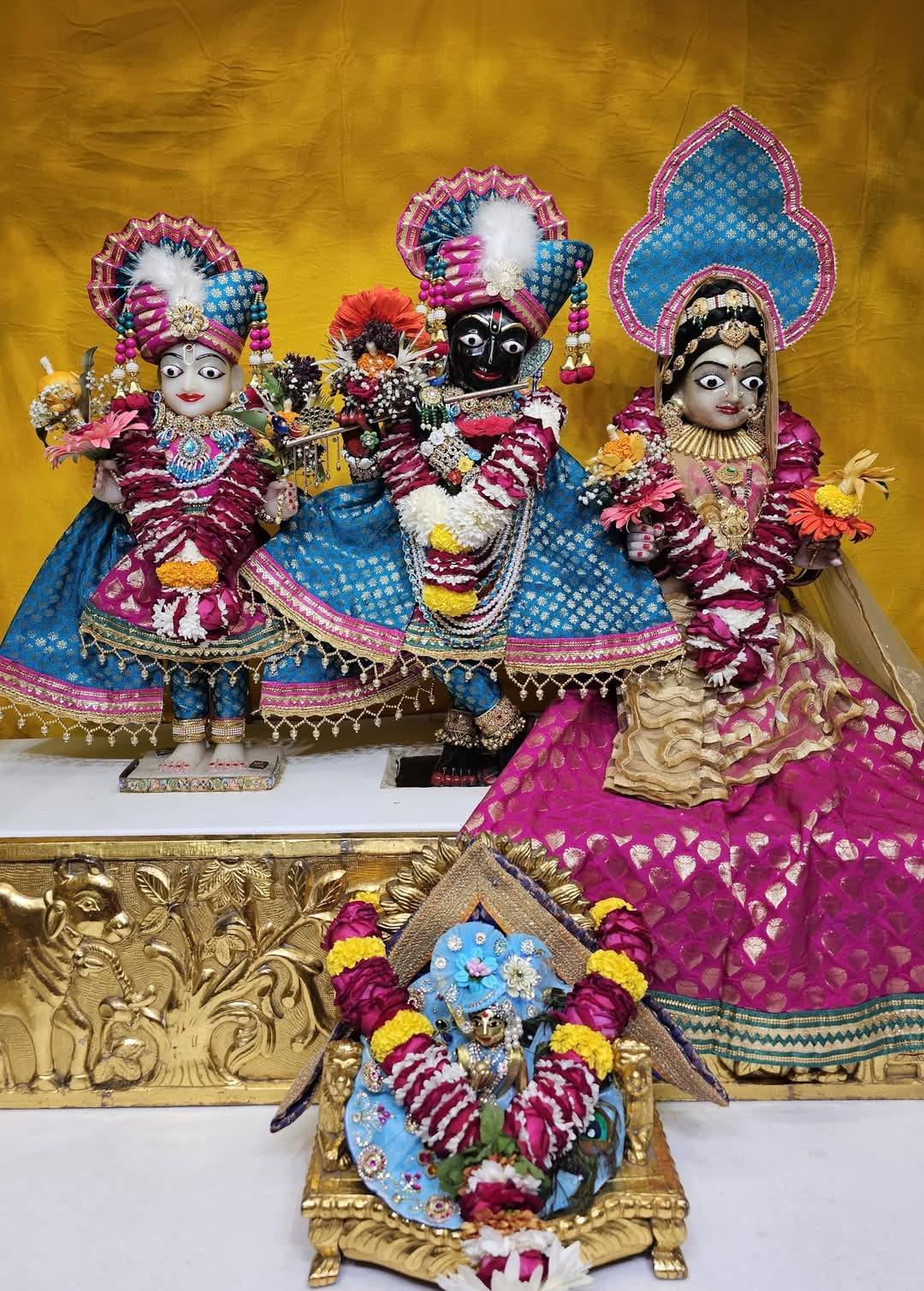
Following this divine instruction, the team accelerated the work. On Fagan Sud 11, V.S. 1926, the murtis of Shree Radhavihari Maharaj, Shree Radhikaji, and Shree Narayanmuni Dev were re-installed in the new shrines by sacred Brahmins, allowing Gangaram Sheth to realize his dream. Acharya Shree Bhagwatprasadji Maharaj arrived later to perform the official pratishtha aarti and organize a grand mahotsav.
Completion and Final Installations (1883 C.E.)
The remaining construction continued for another 13 years, finally concluding in V.S. 1939 (1883 C.E.). To mark the completion:
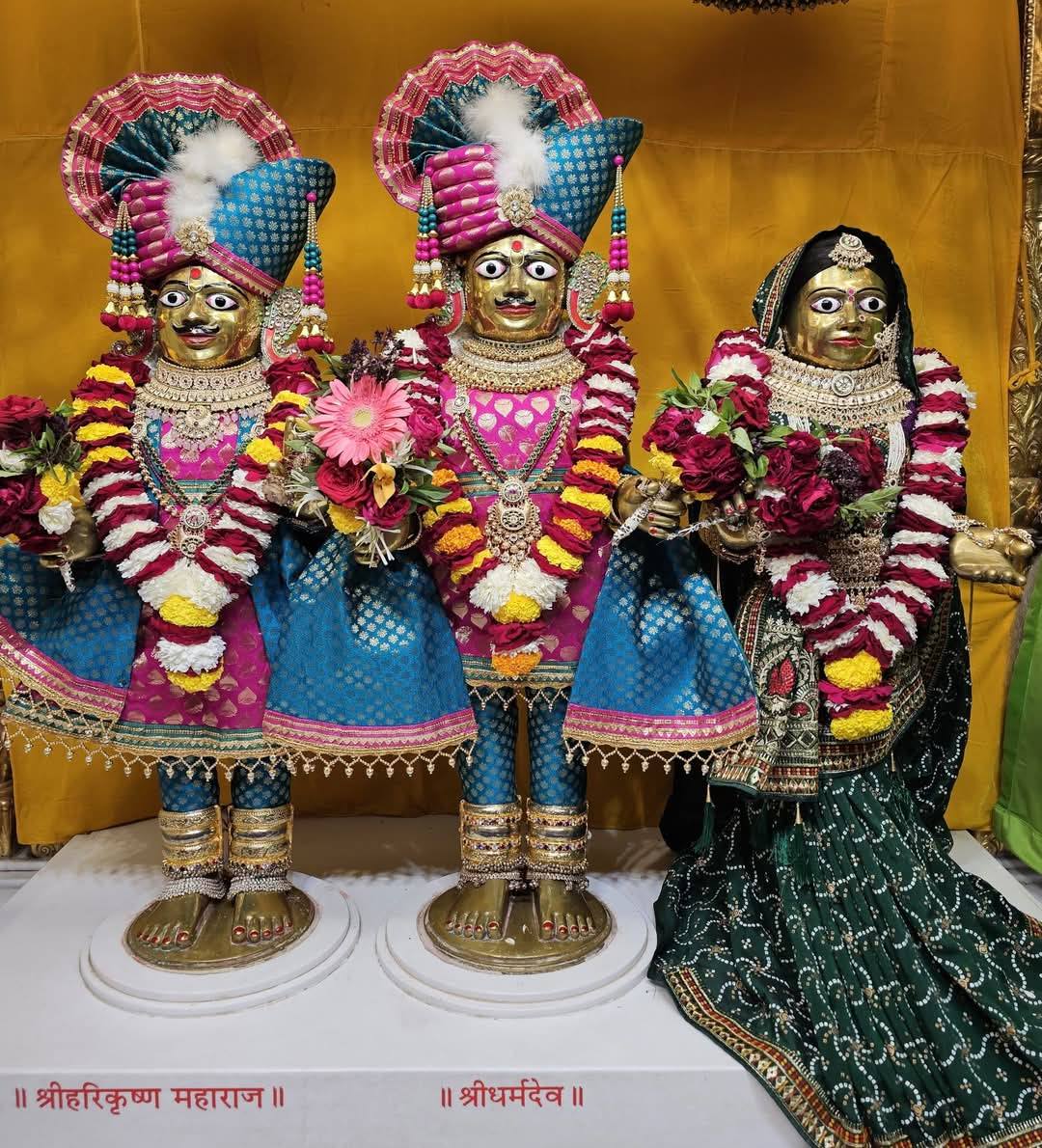
- Fagan Sud 2, V.S. 1939: At the request of Vignananand Swami and the devotees, H.H. Acharya Shree Viharilalji Maharaj performed the pratishtha of Shree Dharma Bhakti Harikrishna Maharaj in the southern shrine.
- V.S. 1955: Acharya Shree Viharilalji Maharaj later installed a wooden murti of Shree Ghanshyam Maharaj.
Today, the Rampura Mandir stands as a magnificent testament to the hardships endured by the Santo and Haribhakto, and a symbol of the eternal blessings showered by Narayanmuni Dev upon those who never lose their faith.